
We stand under the same sun, but not from the same place. That phrase does not organize, does not equalize, does not soothe. It exposes. If the city claims to be a refuge, it has to be said clearly: it never was. What it really does is reorganize violence, make it less visible, more manageable, but doesn’t make it disappear. The city promises freedom, but it runs under very specific conditions, and when you arrive, you don’t enter it. You adjust to its rhythm.
Many of the people in this project arrived in the city with that promise: the possibility of being. There, the kind of freedom you long for doesn’t exist. What you find instead is another way of negotiating with the same forces. The family that rejects, the system that pushes you out, the precarity that keeps pressing, all of that is still there, just redistributed. Here in Latin America, not every context operates the same way. In some places, violence gets diffused. In others, it is imposed directly, even by the state. What changes is the form, not the pressure. Structures mutate, they shift, but they keep operating.
What connects these images is not the city. It is the body. The body as the only place where something like freedom can happen. It is not stable. It appears and disappears. Sometimes it is barely visible. But in that appearance, the body holds its ground. Asafe’s gaze works right there, in that unstable moment where the body is still present. Between what the body is in private and what it is allowed to be in public, that in-between space starts to take shape.
The way these images are constructed comes from history, from his relationship to photography and the community. There is no neutrality in how these bodies appear. There is a trained gaze that decides what enters and what stays out, that organizes, cleans, directs. In that operation, a position is being taken. It does not correct reality or deny it. It works with it, aware of its limits, aware of how far the image can be pushed without breaking. And I see that as a responsibility, one that only takes shape within the ludic space of the queer that moves through both the body and the camera.
The direction moves with the body without imposition. Its function is to keep the subject within its context without reducing it to that context. Something runs through many of these images: a relationship to fantasy as a form of construction. The body appears as it is, but also as it can imagine itself, as it can perform itself in front of the lens. That possibility is also part of what is being held. And that is a form of care.
I connect with the idea of ‘care’ as a way of working with the image, because the image is built with the subject’s density, and there, delicacy is not optional. The image is not forced. What would break intimacy is not shown. It is controlled with the intention of not betraying. There is a sense of how far to intervene, because care also implies control. It means deciding how someone appears. Within that logic, aesthetics stops being a resource and becomes a way of thinking. It does not come after. It organizes from the beginning. At the edges of a certain queer sentimentality, one that does not avoid excess but holds it, there is a way of making images that does not transform the subject or correct it. It lets it exist without reducing it.
Asafe works with aesthetics to hold the subject without betraying it, to keep the image from turning against it. That gesture is not innocent. It comes from a territory where abandonment is a condition that repeats itself, that is inherited, that we learn to endure. And still, there is an insistence on producing images, on building beauty, on not giving up certain ways of appearing.
How exhausting it is to hold yourself here!
And what a strange place this is, where even from that exhaustion, you keep dreaming!
Santiago Méndez,Caracas 2026
The movement of LGBTQIA+ people toward capital cities in Latin America is a well-documented social phenomenon. It occurs for a variety of reasons and motivations, including safety, legal protections, jobs and education, and the presence of established LGBTQIA+ communities and support networks. Additionally, many move in search of personal freedom, self-expression, and the chance to live authentically in environments that are more inclusive and affirming. Staying in their home town often stems from a desire to fight for improvements, refusing to be confined by restrictive structures imposed by family, religion, or tradition.
This series captures their journeys through photographs taken in urban centres of Cuba, Colombia, Venezuela, Chile, Brazil, Argentina, and Mexico. Each image reflects how we confront life within systems of oppression, highlighting moments of rupture and transition, as well as strategies of action and creation in an unequal setting. It offers a way to reconfigure the erasure of our community in Latin America within the contemporary global landscape. These people show that it is possible to live in our land with all the challenges; this is our place.
Change reshapes intimacy and identity but it also deepens our capacity for compassion and solidarity. Every cross-border step is fraught with risk, yet it can also be a testament to brighter futures. These stories reclaiming the right to dream and to find comfort in the new beginnings in Latin America.
At its core, this project celebrates the preservation of social bonds and self-care, offering support and visibility for urgent issues, with remembrance and connection serving as sources of refuge. We are travellers, rebels, dreamers and above all souls first, seeking a horizon where existence itself becomes an act of love.
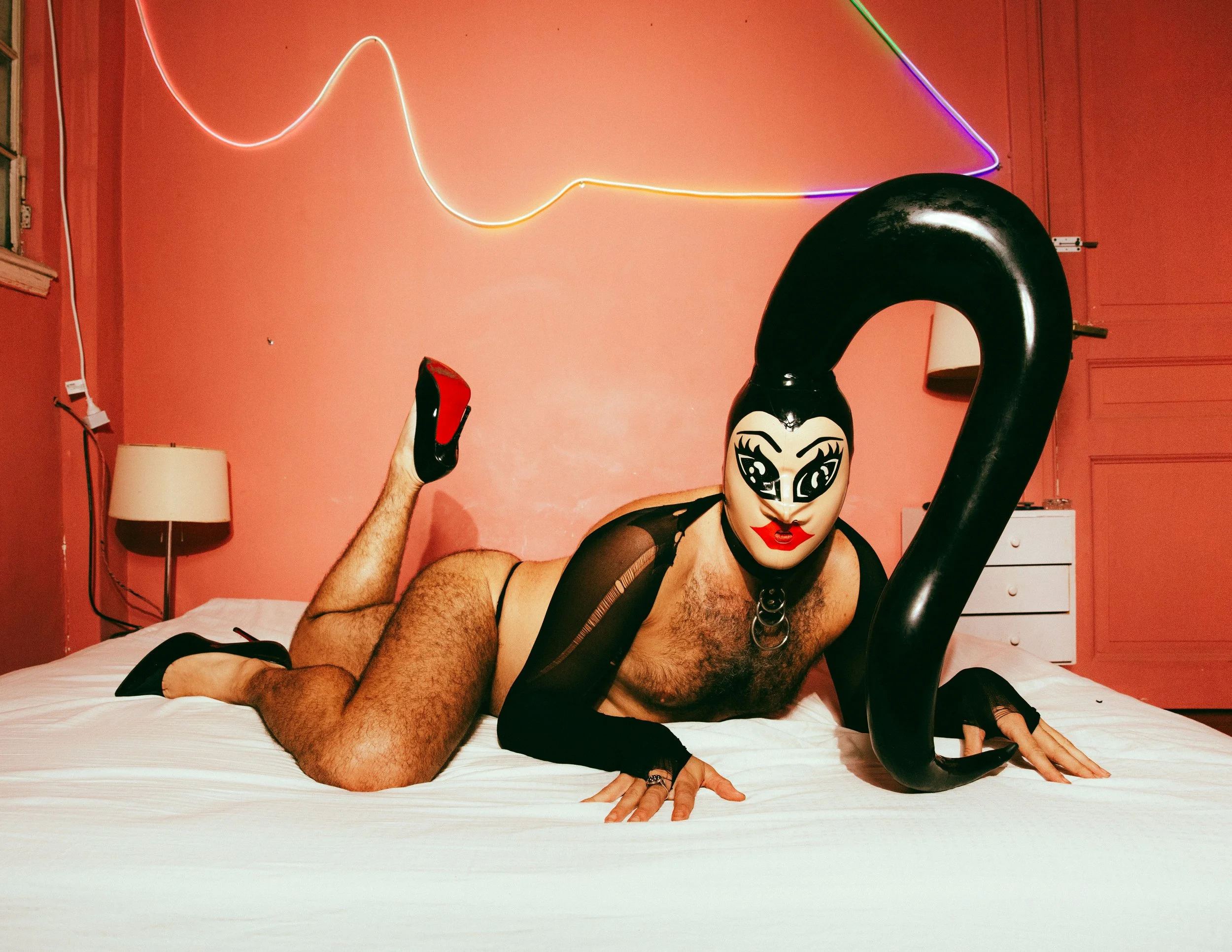
FIFI - BUENOS AIRES - ARGENTINA
One of those dysphoric Sundays in Buenos Aires. I’m a tango singer, usually able to handle the blues after a long vampire weekend, but that day, a young, hot photographer showed up at my door a day earlier than expected. I tried to improvise powerful femininity, but soon realized my sadness was bigger than me. So I summoned my saint, San La Mostra. Latex makeup, my armor to fight against the pressure of being hyper-femme as a trans fat femme. When I enter that state, my emotions run free. I feel power in being true to my low astral.
When I’m lost, I think sex is the only thing I can trade. But that day, faced with a Brazilian boy overdressed in European clothes, I felt something else, an ancient connection. Like I could show him my rawest self. Can you feel the power of my sadness and want me anyway? I told him about my grief: losing my father, the deaths of friends, contemplating the future in this crazy world. Over the years, I’ve been creating rituals new ways to challenge and meet death. For me, as a trans artist, death is another friend someone I should laugh with, dance with, stay up late with, and always negotiate with.
Fifi Tango is a teddy-trans, non-binary artist from Misiones, at the tri-border of Argentina, Brazil, and Paraguay now based in Buenos Aires. She’s a curvy, hairy, high-femme host who swings between softness and chaos. Her performances blend drag, witchcraft, kink, and tango into a raw, unforgettable spectacle.
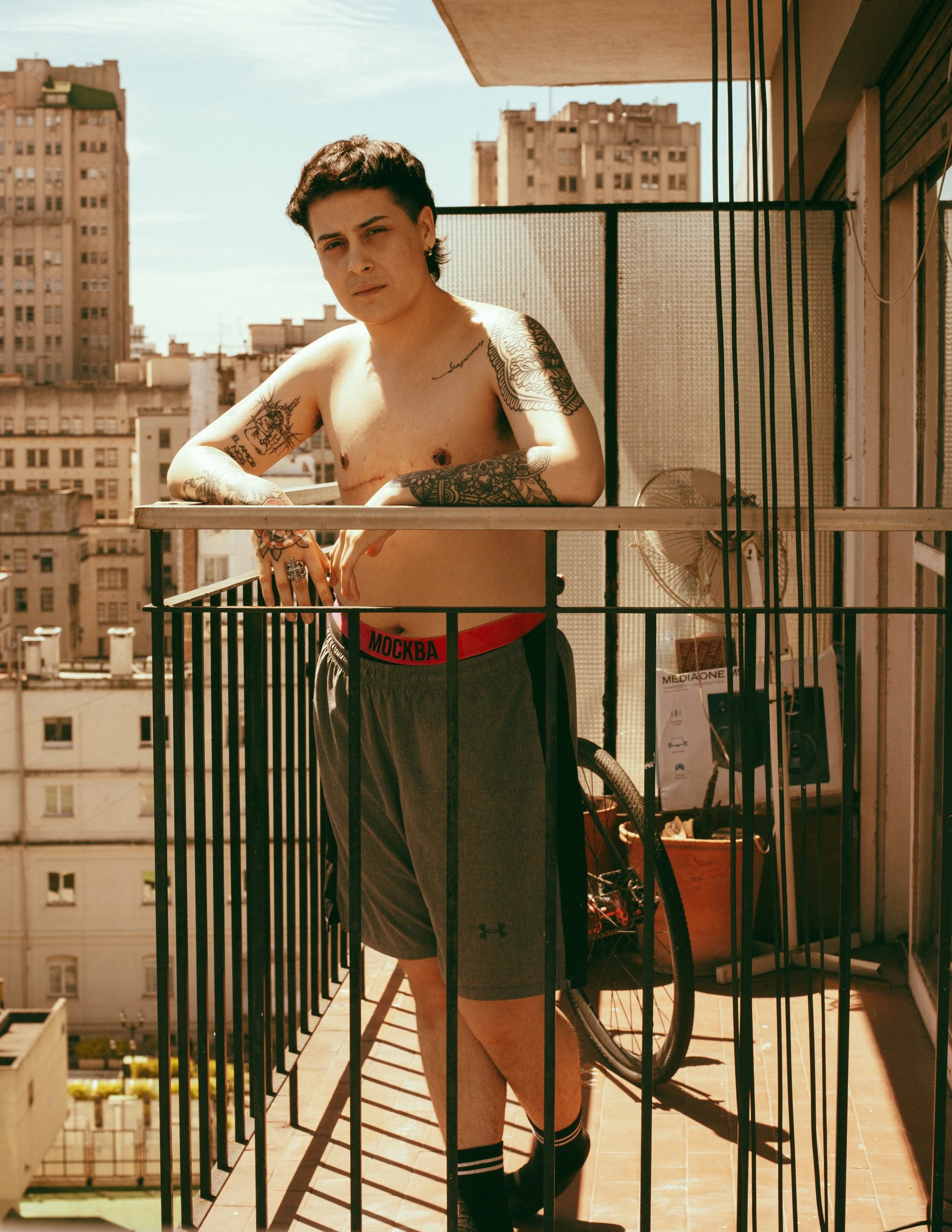
HAR - BUENOS AIRES - ARGENTINA
I've decided to start this journey in Buenos Aires. This is the first image of the project. I walked into Har's house, and on a very sunny day, as the door swung open, I saw his mom cooking in the kitchen. He had just had top surgery, and he reached out to give me a gentle, heartfelt hug.
We began thinking about how he wanted to be seen and remembered. He mentioned that a shirtless photo could capture a dream he’d always held a vision he’d imagined for himself and serve as a testament to progress and a reflection of these times.
Later, outside, he took off his shirt and shared more about himself:
Har, he is a DJ, actor, and music producer. I also work as a national operator for the Argentine Healthcare System within the Ministry of Health.
Reflecting on his journey, he softly said,
"The beginnings, the fears, the small victories. I started my internal transitions long before any external changes."
His mother quietly appeared behind the camera, crossed her arms, and looked at him with sparkling eyes, silent but proud.
He often says, "It is healing in every way."
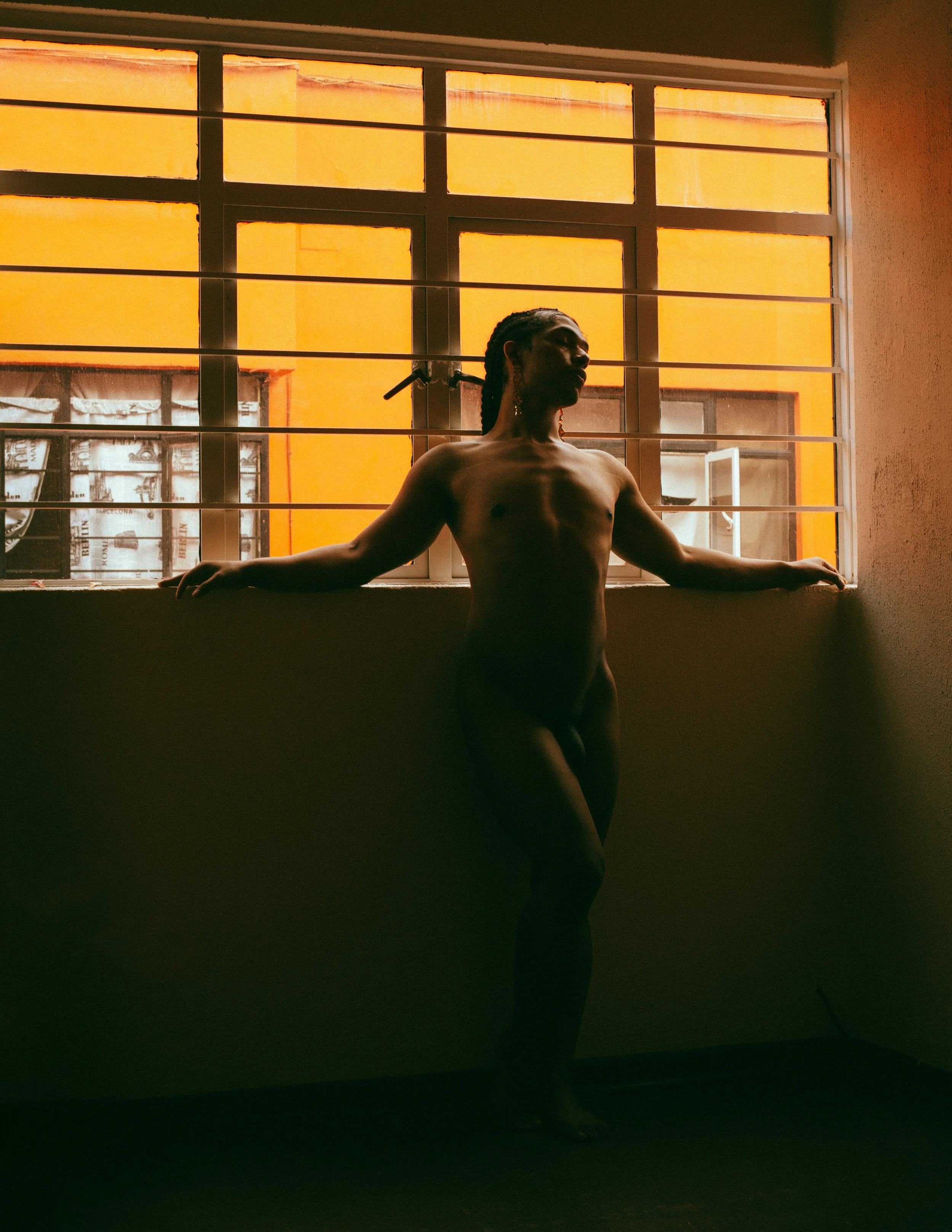
NARS - MEXICO CITY - MEXICO
I met Nars in Juárez, central Mexico City. We hadn’t planned anything, I got her number from someone I photographed the day before. She asked if I wanted to come up for the photos, welcomed me into her apartment, and began introducing herself.
I’m La Nars, 25, a trans woman, artist, dancer, and event organizer for the trans, Black, and Prieta communities. After a few minutes into our conversation, she shared that her plans were interrupted when COVID arrived in Mexico, forcing her to return to Cancún. She finished university online and searched for work, but faced her biggest challenges: the loss of her grandparents and uncles to COVID. Soon after, she tested positive for HIV. She initially faced it alone but soon realized she needed support. The murder of a person living with HIV in Cancún for disclosing his status deeply affected her, fueling fears of being discovered and recognized. But those fears no longer control her life.
With her savings and dreams, she moved to Mexico City, telling herself, “Whatever comes, will be good.” Since arriving, she’s discovered a strength and self-worth she never knew she had. Embraced by her chosen family, she knows she can always find a safe, understanding space. Here, she breathes and she is.
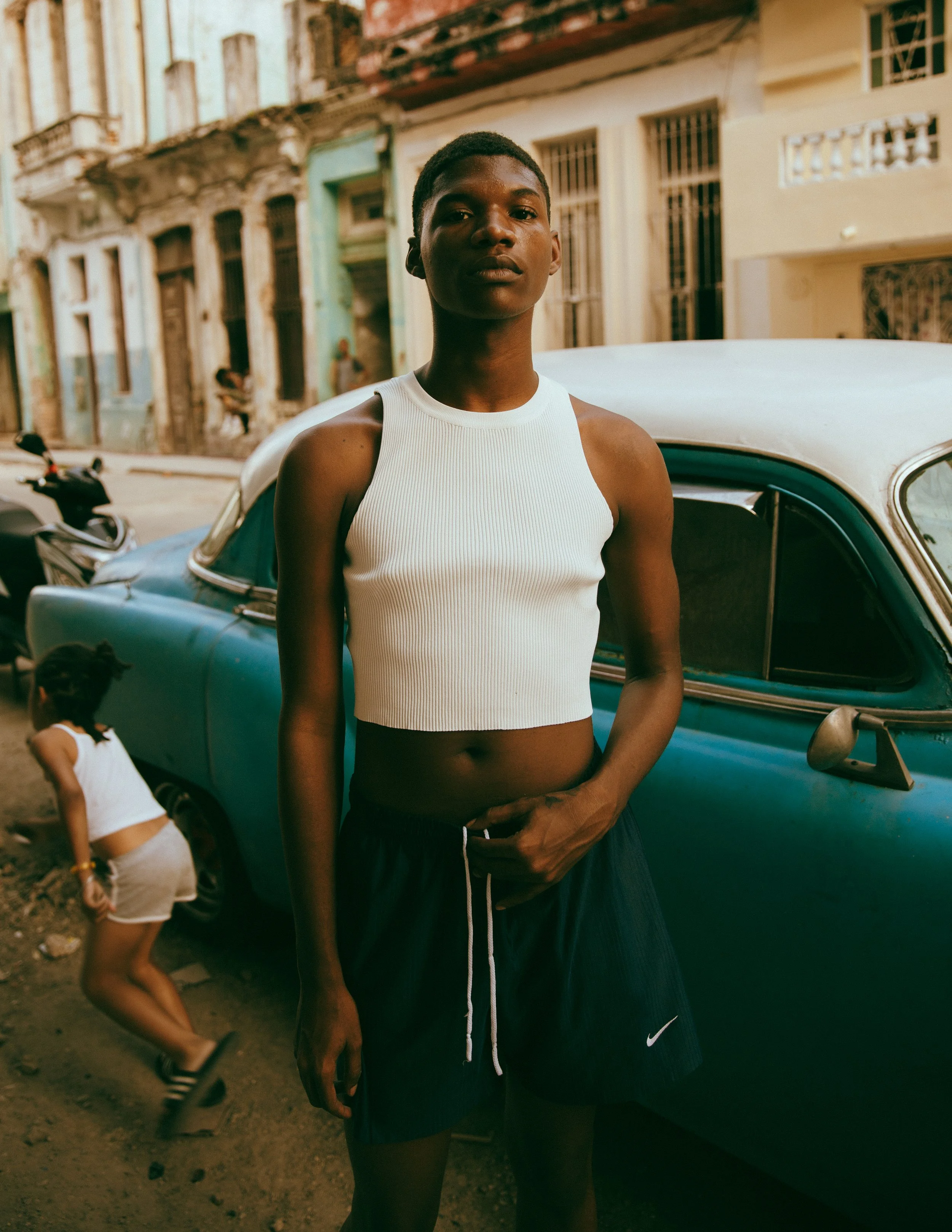
ANDY - HAVANA - CUBA
Andy, lives in Havana, Cuba. “I live alone with my mother; my father has passed away, and I have a brother who is in prison. Life has been tough, there’ve been days when everything feels heavy, when fear seems to take over. But I’ve learned that living alongside fear is possible. I believe that if we only cared about fear all the time, we wouldn’t really be alive. Fear is part of us, just like joy or sadness.
Every moment of shame that pulls us apart, every doubt that makes us question ourselves, despite all that, we keep going. We are here, afraid, but also present, because if we stopped feeling anything at all, we’d lose track of what causes us pain and, more importantly, what makes us happy, what excites us.
I’ve learned that embracing those feelings, even the uncomfortable ones, is what keeps us grounded. Life in Havana, with all its struggles, has taught me that. It’s not about pretending everything is perfect, but about finding strength in what we feel and learning to keep moving forward, one day at a time.”
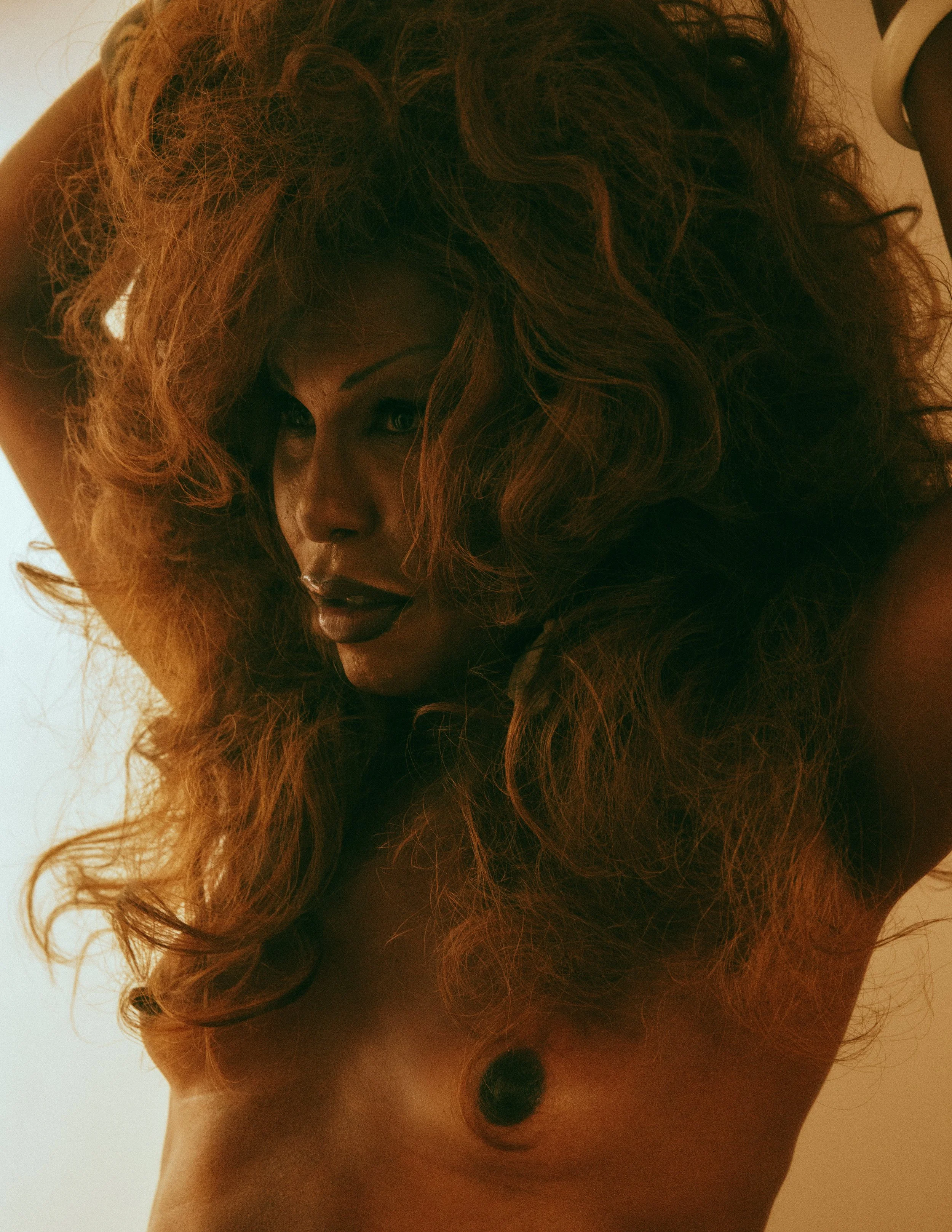
MAX - SÃO PAULO - BRAZIL
Max is an artist and television presenter from São Paulo who stands out in the Brazilian art scene. She was born in Paraíba and moved to São Paulo at a young age, growing up amidst the city's rich cultural diversity.
Max is known for her strong personality, authentic style, and work that blends fashion, art, and personal expression. As an artist, she employs various media, including fashion, performance, and visual art, to explore themes related to identity, body, gender, and popular culture. Her career is characterized by a constant questioning of traditional standards and a pursuit of complete freedom of expression.
In addition to her artistic career, Max is a highly influential figure in the media, having worked as a TV host on programs that address topics on culture, fashion, and social issues. She is also recognized for promoting diversity and inclusion, positioning herself as an important voice for LGBTQ+ communities and non-conventional artists.
She frequently shares her personal experiences, struggles, and victories, inspiring many people to accept themselves and fight for their dreams. Her charismatic personality and authenticity make her a prominent figure in the Brazilian cultural scene.
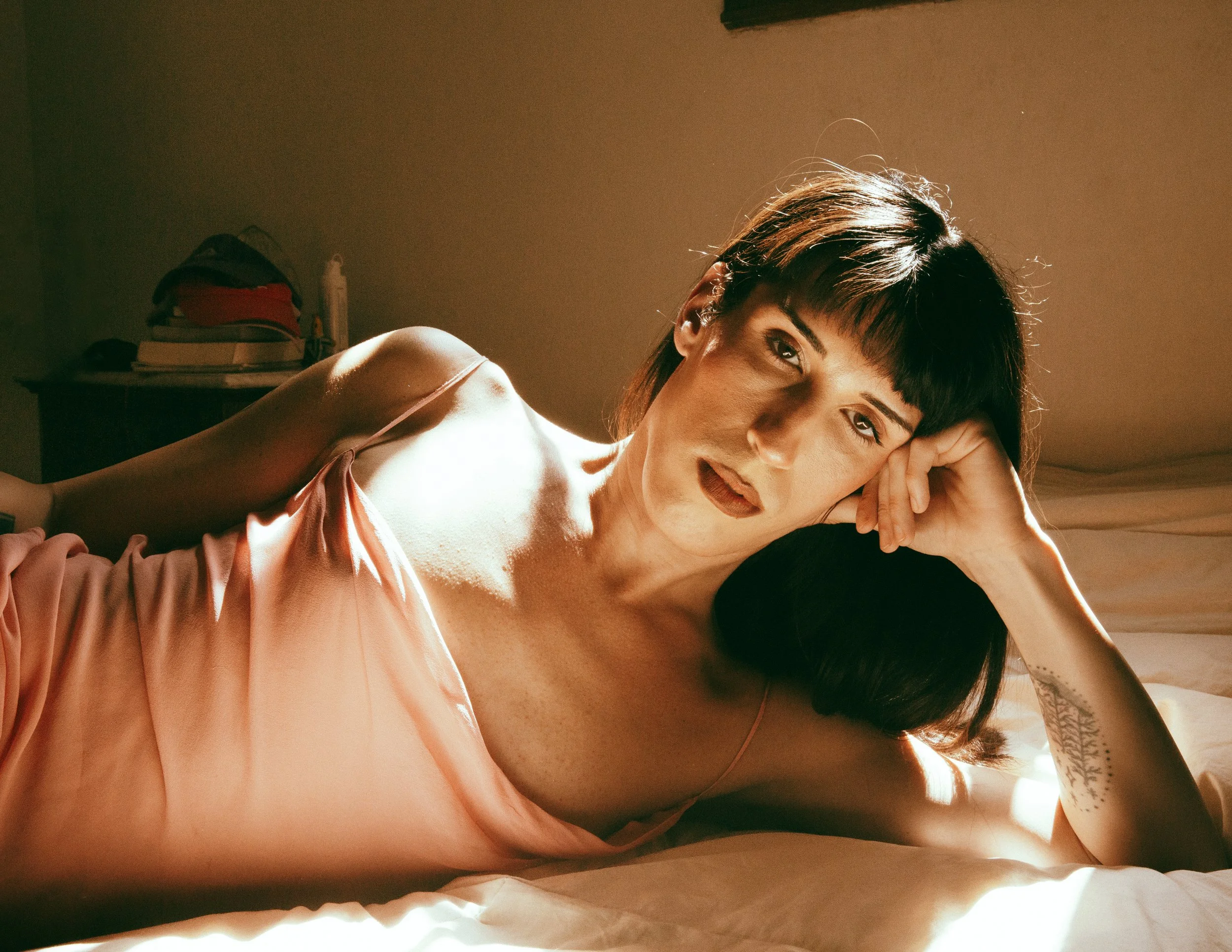
EVA - BUENOS AIRES - ARGENTINA
My name is Eva Lucero, known as Lucero. I’m from Rosario, and I’ve been living in Buenos Aires for about a year. For a long time, I’ve been carving my artistic identity, exploring roles and reconnecting with myself. My journey has been deeply personal, challenging fears, insecurities, and internal voices that tried to define me.
Deciding to leave the city where I was born and venture into other scenes in Buenos Aires and Córdoba marked a turning point. It was a declaration of owning who I am and why I came into this world: to give show, to reveal my truth. As a trans woman, Buenos Aires has been both a place of opportunity and confrontation, a space where I confront society’s expectations and my own fears. My art is raw, intimate, and rooted in my deepest pains, transforming vulnerability into a brighter future.
Living here has taught me that authenticity is the ultimate act of rebellion. To be trans in Buenos Aires means to fight for visibility, to reclaim my voice and my space.
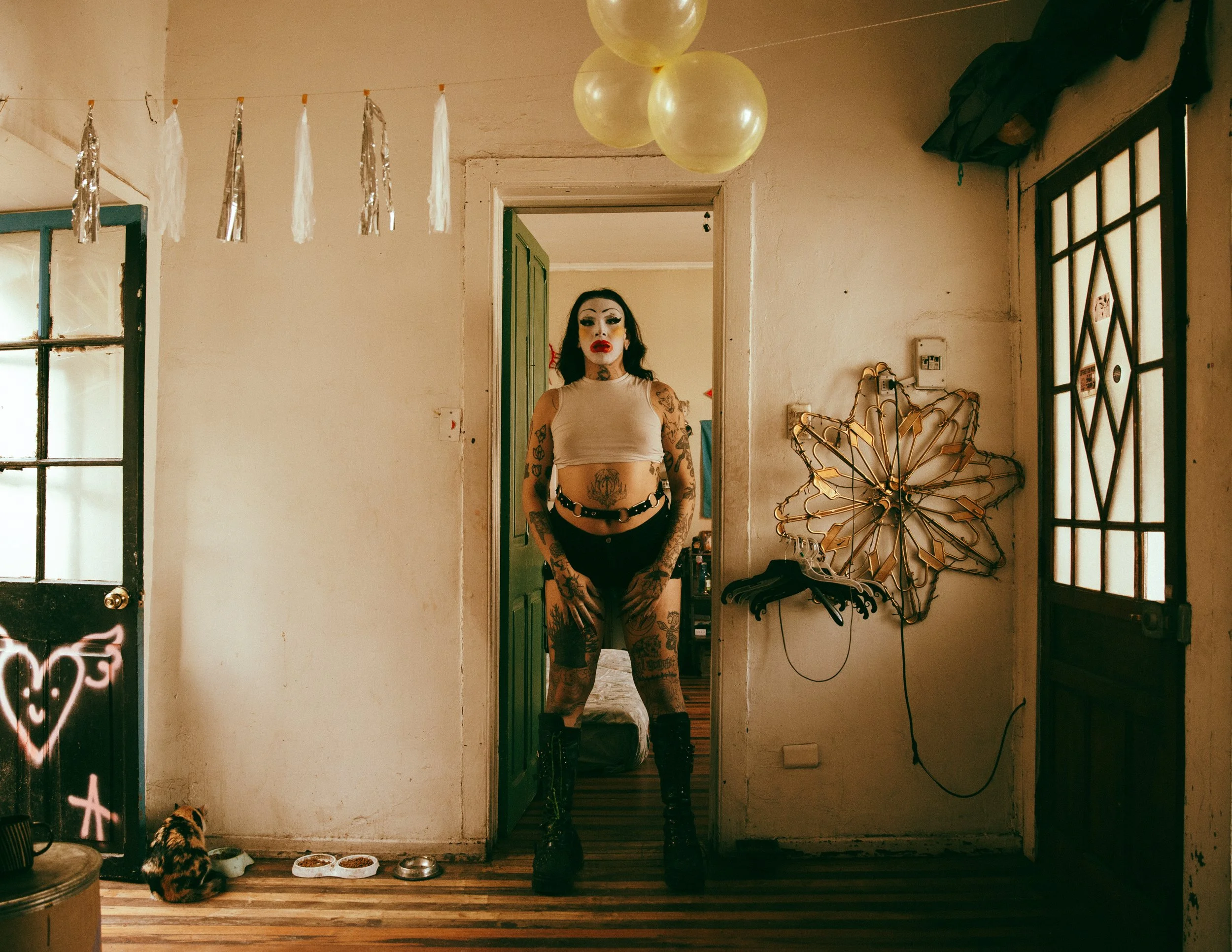
SANGRE - SANTIAGO - CHILE
Savhána is a trans woman ballroom performer from Santiago, Chile. She describes her experience by saying, "There is no longer any division between reality and fantasy. It felt like unlocking the most pure and dangerous part of childhood, exposing this infernal light within me. A betrayal of family beliefs, yes, but also a profound act of liberation, a renewed sense of intimacy with life itself. This journey has been an exhilarating rebellion against societal norms and internalized fears, a reclaiming of my own truth through radical authenticity. It’s about embracing every facet of myself, even those that were once kept hidden or considered shameful, and turning them into sources of strength and creativity. That dangerous innocence, that wild, unfiltered aspect of being alive, has become my most powerful tool. It’s a constant dance between vulnerability and power, shame and pride, chaos and clarity. I believe that when we dare to confront these depths, we find a fierce liberation that redefines what it means to truly live. For me, this is not just performance; it’s a spiritual act of self-acceptance, an unmasking of the divine chaos that exists within all of us, and a celebration of the intense, unfiltered light that burns at the core of my being."
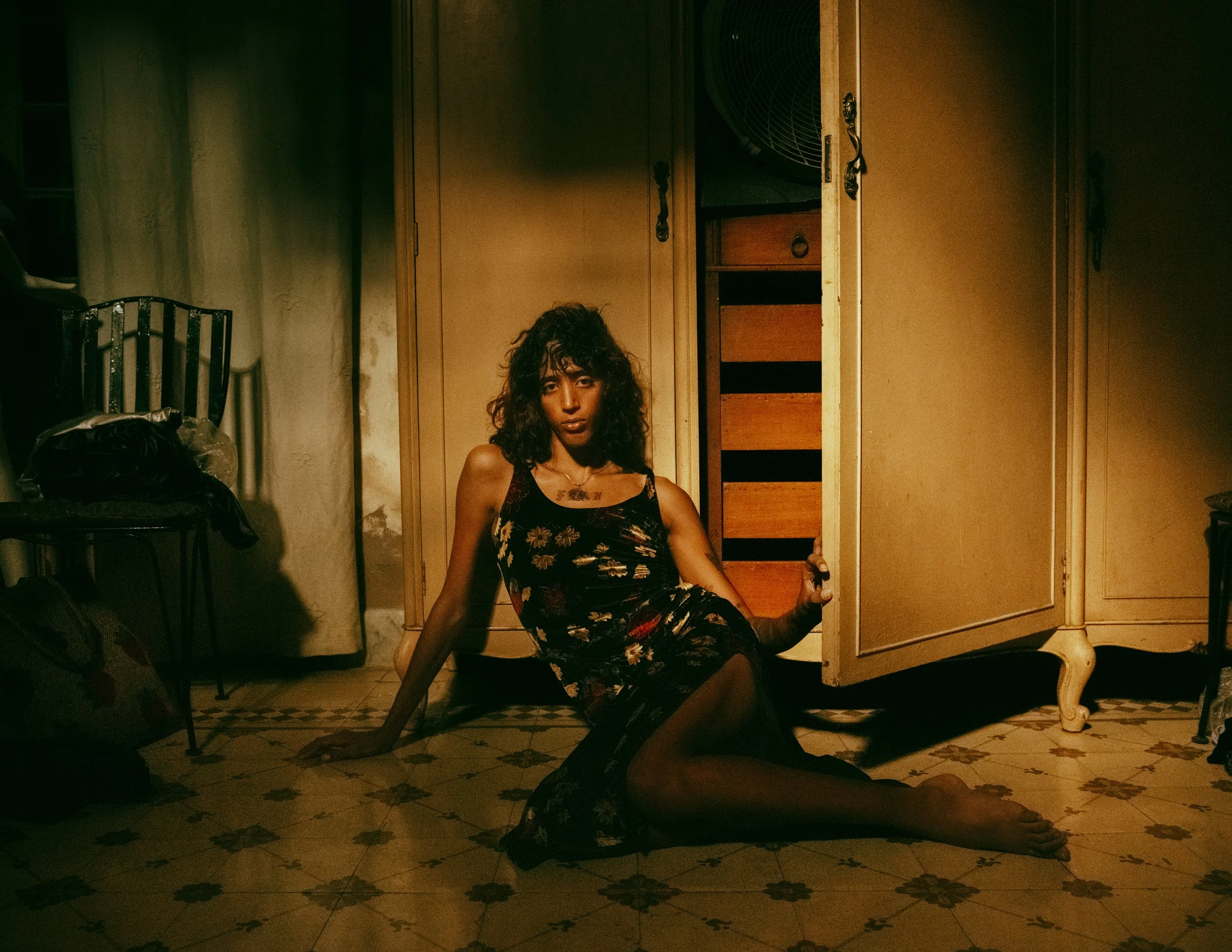
RICH - HAVANA - CUBA
My name is Richard Castillo Castro, and I come from Havana, Cuba. Havana’s a city full of life, it speaks to my soul, the rhythm, the history and it’s a place where most LGBT folks end up, because it offers a bit more freedom, a sense of community, and a chance to be yourself. My parents are my confidants and the core of who I am. When I finally shared my truth, something they had probably guessed they looked at me with kindness and said, “What is known doesn’t need to be asked.” That’s a phrase I’ll carry forever.
Life hasn’t always been easy, I’ve faced harsh words, doubts, and at one point, I almost gave up. But I found my way back. Now, I’m just being me. If my truth makes you uncomfortable, then look elsewhere and be mindful of where you’re directing your gaze. Being on the land that holds my culture is a privilege that comes from not being afraid. I was born in the south, into a poor family, on the periphery, and I’ve never had fear of the street.
For sales and inquiries, please contact: jl.adams@hotmail.co.uk
CONTRIBUTORS:
SANTIAGO MENDEZ
DANIELA PERDOMO
ALEX GALAZ
JAMES ADAMS
ALDEMAR AMARILLO
PAULA TURMINA
ENZZO HERNÁNDEZ
GEORGE VELEZ
LETICIA COLIN
MAIKA MANO
JOHNATHAN FAIFER
NICO OYARCE
EDISON ALCAIDE
JOSE RIVIERO
ISSAC DE REZA
EFFY MARIA
LUIZ JUÁREZ
FUNDACION MECENAS